Carl Orff, Carmina Burana, 1936
Carl Orff composed this secular choral masterpiece using 24 poems from a medieval collection of the same name. Its full Latin title is Carmina Burana: Cantiones profanae cantoribus et choris cantandae comitantibus instrumentis atque imaginibus magicis (“Songs of Beuern: Secular songs for singers and choruses to be sung together with instruments and magical images”).
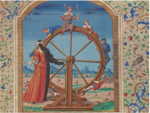
Much of the compositional structure is based on the idea of the turning Fortuna Wheel. Within each scene, and sometimes within a single movement, the wheel of fortune turns, joy turning to bitterness, and hope turning to grief. “O Fortuna”, the first poem completes this circle, forming a compositional frame for the work through being both the opening and closing movements.
The libretto is mostly in secular Latin verse, with a small amount of Middle High German and Old French. The piece covers a wide range of topics, as familiar in the 13th century as they are today: the fickleness of fortune and wealth, the fleeting nature of life, the joy of the return of spring and the pleasures and perils of drinking, gluttony, gambling, and lust.

Rafael Ornes, conductor, is a conductor and educator with over 30 years’ experience. For the past 16 years he has conducted the Stanford Summer Chorus. After earning a bachelor’s degree in electrical engineering from Stanford, he pursued graduate studies at San José State University and Stanford University, where he studied under William Ramsey, Gregory Wait, and Charlene Archibeque. Rafael was Minister of Music at Valley Presbyterian Church in Portola Valley for over 25 years and presently directs handbells at First Congregational Church in Palo Alto. He is the music director at Portola Valley Theatre Conservatory, has directed Collage Vocal Ensemble, and is active with other local choral, handbell, and theatre groups in the Bay Area.
He is also the founder of the Choral Public Domain Library (CPDL, cpdl.org), which has grown to be one of the largest repositories of free online choral music, with over 50,000 freely available scores and thousands of contributors.

Tamami Honma, pianist, consistently receives acclaim as a performer and recording artist. A student of Byron Janis, who in turn was a student of Horowitz and both Lhevinnes, Ms. Honma is firmly rooted in the great Romantic tradition. Her appearances have attracted praise, as soloist at Bolshoi Hall with the Moscow Radio Symphony Orchestra, at Carnegie Hall — “an eloquent, powerful performance” (New York Times) — and at Wigmore Hall in London — “an interpretation that was probably as transparent and faithful to the Goldberg Variations as it’s possible to be on a modern piano” (Music & Vision).
She has frequently appeared on radio and television in Europe and in the U.S. and participated in major music festivals such as the Aldeburgh Festival and the Warsaw Autumn. Her recordings range from Mozart and Chopin to new composers. She has been featured in BBC Music Magazine, Gramophone, The Guardian, The Independent, International Music Review, Yomiuri Shinbun, and various U.S. newspapers. Her recordings have garnered five-star reviews from BBC Music Magazine and Gramophone. Recently, she released her renditions of the complete 35 Beethoven Piano Sonatas under Divine Art Recordings.