

Mozart, Requiem, 1791 Mozart’s Requiem is a masterpiece that blends profound musical genius with a haunting real-life mystery. Famously left unfinished at the composer’s death in 1791 (completed by his student, Franz Xaver Süssmayr), it carries the cultural mythos of being his own “swansong,” as he believed he was writing the mass for his own funeral.
The Requiem sounds more like a theatrical drama than a traditional church service. Using the dark, passionate key of D minor, Mozart contrasts moments of terrifying judgment (the Dies Irae) with intimate, deeply moving pleas for mercy (the Recordare and Lacrimosa).
The Lacrimosa is arguably the most famous movement of the work. It was the last part Mozart actively worked on before he died, and its soaring, weeping vocal lines are universally considered one of the most emotional moments in all of classical music.

Lauridsen Lux Aeterna, 1997
Morten Lauridsen’s Lux Aeterna is a requiem, but unlike better-known requiems by the likes of Verdi and Mozart, Lauridsen’s work is a tranquil, light-filled piece.
After its premiere, a writer for The Times called it “a classic of new American choral writing” and said, “old world structures and new world spirit intertwine in a cunningly written score, at once sensuous and spare”.
The best-known, most performed section of the work is the haunting a cappella O nata lux. The Latin text translates as “O light born of light, / Jesus, redeemer of the world, / deign in mercy to accept / the offering of praise and prayers.” The music is harmonically opulent and Lauridsen luxuriates in the power of the choral sound.
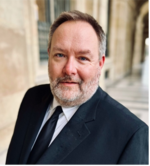
Buddy James, conductor, began as Artistic Director of Schola Cantorum with its 2019–2020 season. He is also Professor of Music at California State University, East Bay where he serves as Chair of the Department of Music and the Coordinator of Choral and Vocal Studies and was the Founding Director of the School of Arts and Media. He has taught at the University of Southern California, the University of California at Berkeley and Irvine, Whittier College, Elizabethtown College, and Millersville University, where he was named Person of the Year in 2004. In March 2014 he conducted the East Bay Singers by invitation at Japan’s Fukuoka Institute of Technology. In 2007 he guest-conducted Pro Musica Vilnius in Lithuania in a program of American music, and his ensembles represented the United States at the 2005 and 2008 World Choral Festivals in Puebla, México, and in Vilnius in 2009 in celebration of the anniversary of Pro Music Vilnius and Vilnius’ designation as the European Capital of Culture.
Conducting credits include performances for The Lancaster Opera Company, The San Francisco Bay Area Chamber Choir, Composers Inc., The University of California, Irvine Symphony Orchestra, the Whittier Bach Festival, musicanovus, the University of Akron New Music Ensemble, and he was music director of the CSU East Bay Symphony Orchestra from 2007 to 2010. His teachers include William Dehning, Joseph Hustzi, Edward Maclary, and Robert Page and he was recipient of the 2015-16 George and Miriam Phillips CSUEB Outstanding Professor Award.
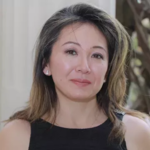
Tamami Honma, pianist, consistently receives acclaim as a performer and recording artist. A student of Byron Janis, who in turn was a student of Horowitz and both Lhevinnes, Ms. Honma is firmly rooted in the great Romantic tradition. Her appearances have attracted praise, as soloist at Bolshoi Hall with the Moscow Radio Symphony Orchestra, at Carnegie Hall — “an eloquent, powerful performance” (New York Times) — and at Wigmore Hall in London — “an interpretation that was probably as transparent and faithful to the Goldberg Variations as it’s possible to be on a modern piano” (Music & Vision).
She has frequently appeared on radio and television in Europe and in the U.S. and participated in major music festivals such as the Aldeburgh Festival and the Warsaw Autumn. Her recordings range from Mozart and Chopin to new composers. She has been featured in BBC Music Magazine, Gramophone, The Guardian, The Independent, International Music Review, Yomiuri Shinbun, and various U.S. newspapers. Her recordings have garnered five-star reviews from BBC Music Magazine and Gramophone. Recently, she released her renditions of the complete 35 Beethoven Piano Sonatas under Divine Art Recordings.